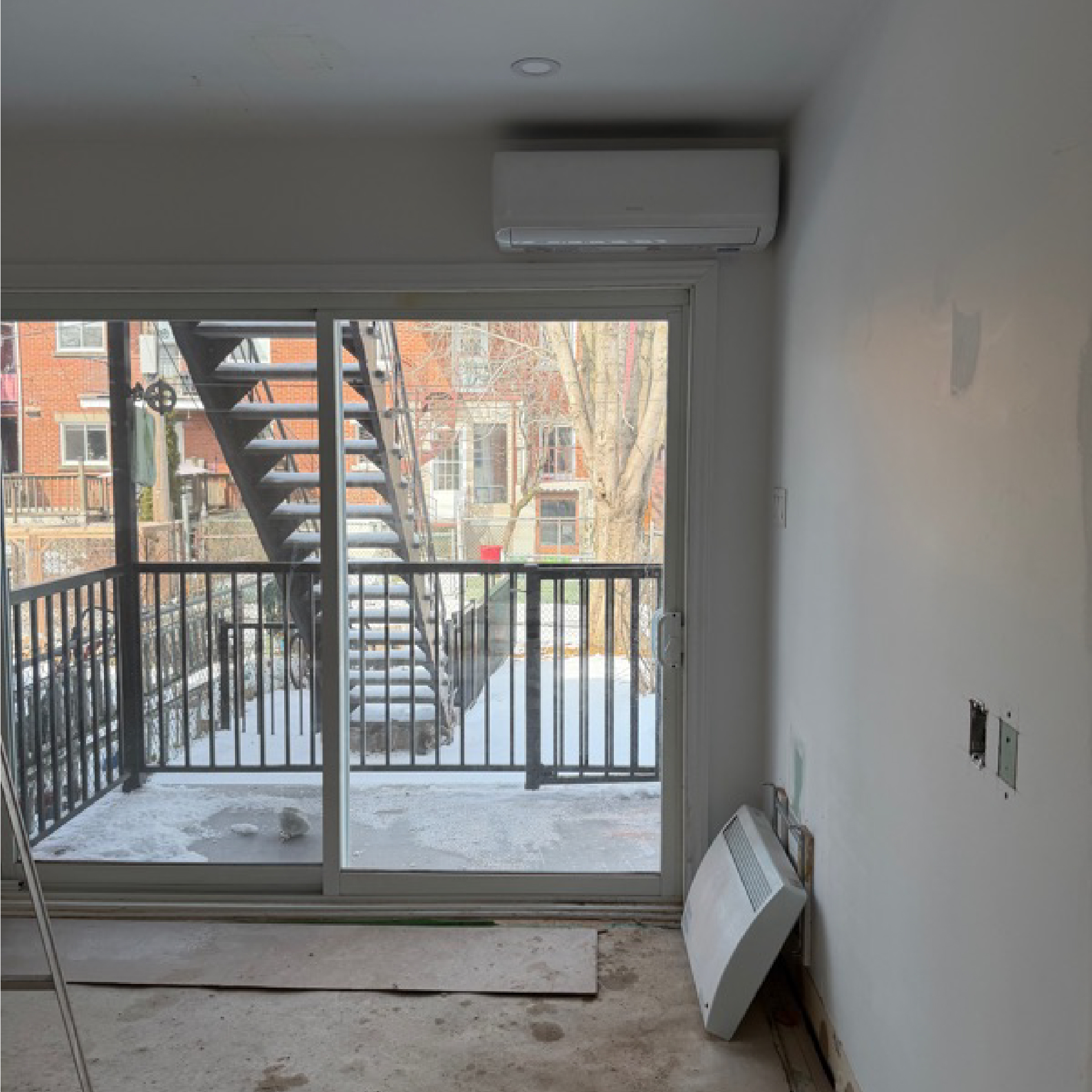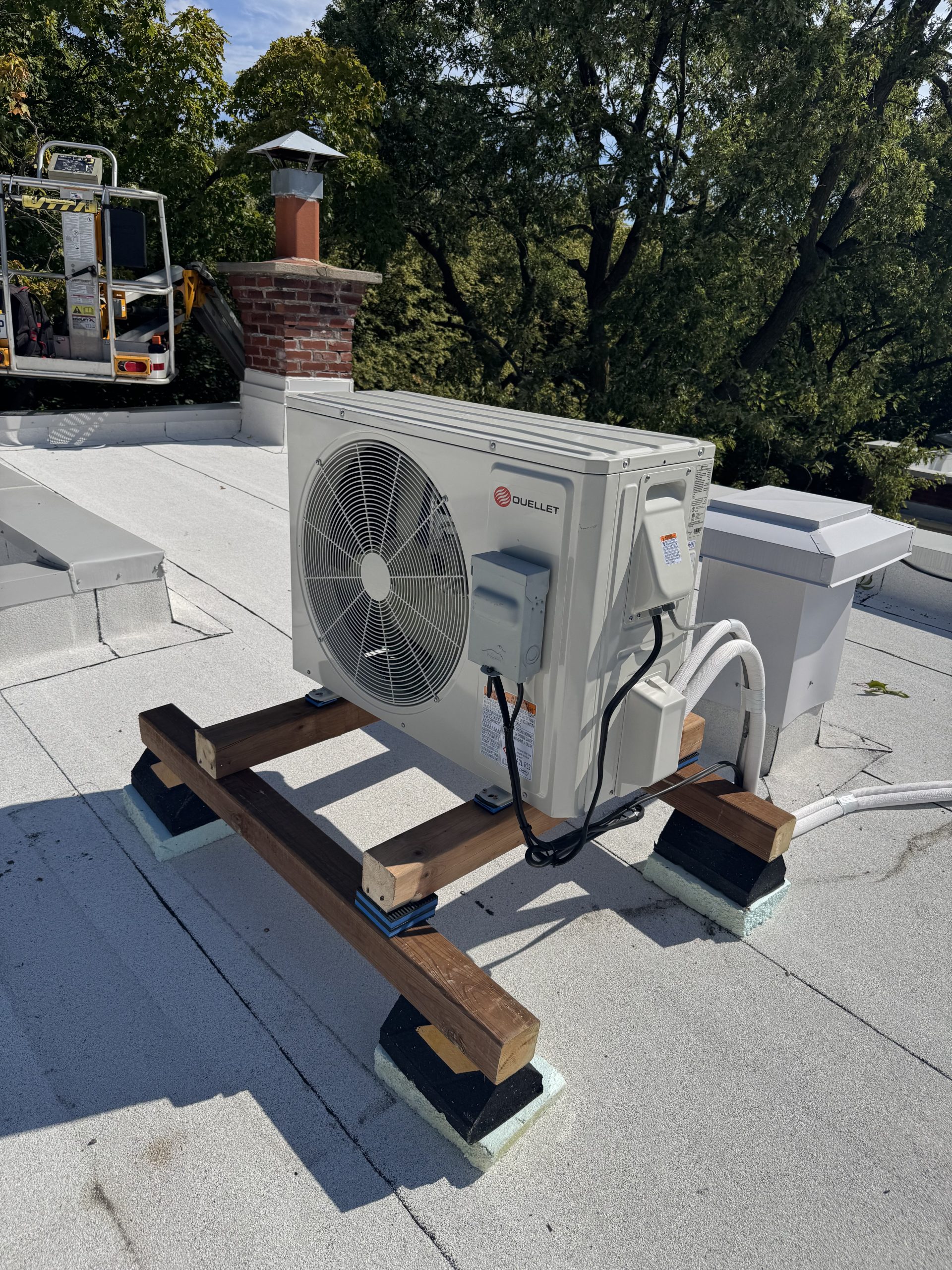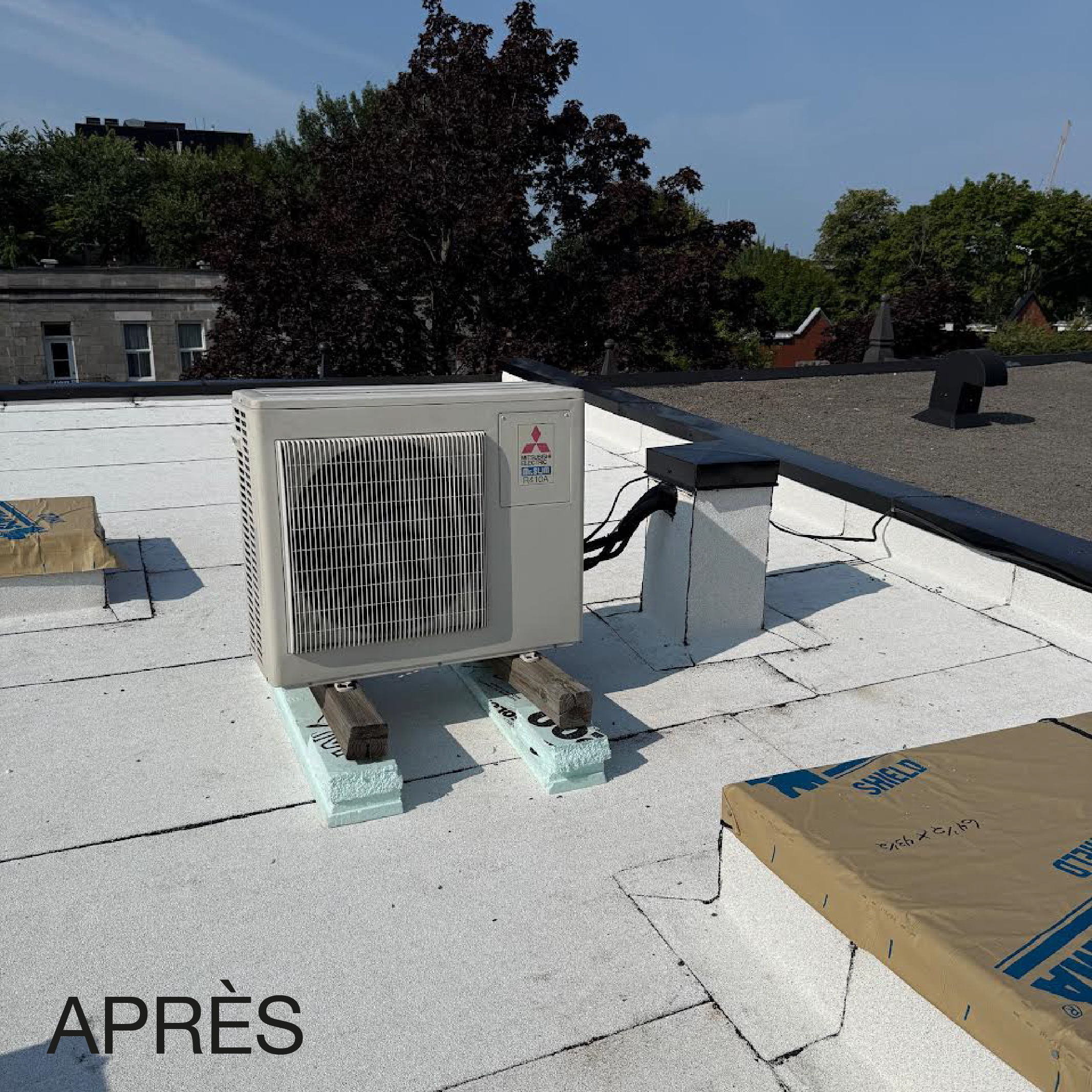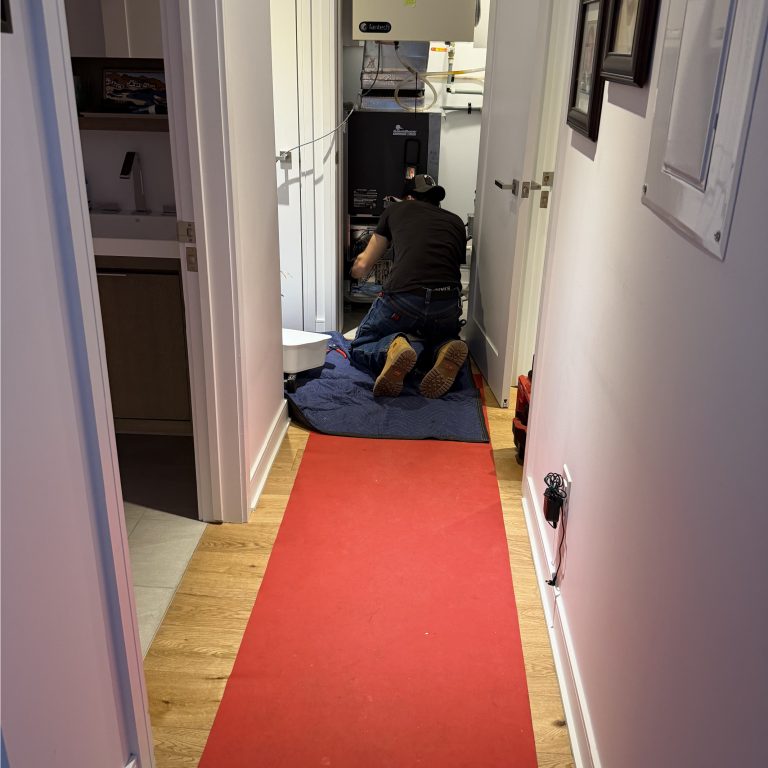
Before installing a heat pump in your condo, obtain written authorization from the condo association. The outdoor unit, wall drilling, and pipe runs almost always affect common areas. Ask the association six specific questions about location, appearance, electricity, noise, maintenance, and responsibilities, then have your installer review the project.
Why the union has a say
In a condominium, your unit is private, but the exterior walls, facade, roof, and often balconies are common areas or restricted use. A wall-mounted heat pump requires an outdoor unit, a hole in the wall, and pipes running along the facade—all elements that affect the entire building. The declaration of co-ownership and the building’s bylaws specify what is permitted and how to obtain authorization. Read them before requesting quotes.
Some building associations already have policies regarding heat pumps: permitted locations, accepted models, and pipe cover colors. Others decide on a case-by-case basis. In both cases, a clear and documented request speeds up the response.
6 questions to ask the union
- Where can the outdoor unit be installed? Balcony, facade, roof, or ground: ask which locations are permitted and if a specific mounting bracket is required. A balcony with restricted use and a shared roof are not subject to the same regulations.
- Are there any appearance requirements? Colour and position of pipe covers, alignment with other units, prohibition on the main facade: it’s best to know this before choosing the location.
- Is it permissible to drill through the exterior wall, and under what conditions? The condo association may require that the drilling be done by a licensed contractor, sealed according to a specific method, or inspected by its manager. Also, ask who is responsible for repairs in case of water infiltration.
- Is the electrical supply sufficient? The heat pump requires a dedicated circuit. In some buildings, the unit’s electrical panel is full, or the building’s electrical capacity is limited. The condominium association may have rules for all electrical work.
- What rules apply to noise and vibration? The outdoor unit must not disturb the neighbors. The building management may require anti-vibration mounts or a location away from the windows of other units.
- Who is responsible for the appliance, its maintenance, and any damage? Make sure it is clearly stated in writing that you own the appliance, that you are responsible for its maintenance, and what happens during work on the building, for example, roof or facade repairs where the appliance needs to be disconnected.
The file to be submitted to the union
A complete application avoids unnecessary back-and-forth. We recommend including:
| Document | For what |
|---|---|
| Technical specifications of the selected model | Dimensions, weight, noise level of the outdoor unit |
| Map or annotated photo of the location | Position of the outdoor unit, drilling, and piping |
| Contractor’s Submission | Description of the work, type of support, wall sealing |
| RBQ license number and contractor’s insurance | Proof that the work is being done by a qualified company |
| Schedule | Date and duration of the work, access required |
At HVAC MTL, we prepare this information with you and we can answer the manager’s technical questions directly.
Choose the device based on the capacitor
In condos, a wall-mounted heat pump is the most common solution: no ductwork, quick installation, and a compact outdoor unit. A few criteria are particularly important:
- The noise level of the outdoor unit : several models that we install display 52 to 53 dB(A) according to the manufacturers’ specifications for the 12,000 BTU version.
- Power : A well-insulated condo, surrounded by other units, loses less heat than a house. Don’t oversize: see our guide to calculating the BTU size of a heat pump .
- Power supply : 115V models are available, useful when adding a 230V circuit is complicated. Your installer will check what is possible.
LogisVert in co-ownership
Good news: the condo is among the eligible units for LogisVert according to Hydro-Québec’s participation guide (verified October 16, 2026). The usual conditions apply.
- new unit, ENERGY STAR certified, with an outdoor unit of at least 12,000 BTU/h nominal capacity in air conditioning;
- installation by a contractor holding the appropriate RBQ licenses;
- request made by the owner, whose name appears on the invoice and proof of ownership, no later than nine months after installation.
In a building with 20 or more units, an apartment is eligible if it has its own meter and if the work is done by the owner. The “Multi-Unit” bonus, however, excludes condominiums. The amount remains $50 or $120 per 1,000 BTU/h of heating at -8°C, depending on the appliance’s certification. Full details are available on our heat pump grants page.
Building project or individual project?
If several co-owners want a heat pump, the condo association may prefer a coordinated project: same locations, same type of mounting brackets, same contractor. This is simpler to manage and more uniform on the building’s facade. We’ve done this on a large scale with 136 heat pumps in an 11-story tower: see our case study in Côte-Saint-Luc . For shared maintenance of the units, consult our condominium services.
The day of moving into the condo
Inform the building manager and your neighbors of the work schedule, reserve the elevator if required by regulations, and arrange access to the balcony or roof. Drilling through the wall is the noisiest part; the rest of the work is done primarily inside your unit and on the exterior support structure. Keep a copy of the condo association’s authorization along with your invoice; it will be useful when you sell your condo.
Frequently Asked Questions
Do I need the condo association’s permission to install a heat pump in my condo?
In the vast majority of cases, yes, because the outdoor unit, drilling, and pipes affect common areas. Check the condominium declaration and building regulations, then obtain written authorization.
Where should the outdoor unit be installed in a condo?
Depending on what the building management allows: often on the balcony, on the wall, or on the roof. The location must allow for the drainage of defrost water, remain clear of snow, and minimize noise for the neighbors.
Is a heat pump installed in a condo eligible for LogisVert?
Yes, a condominium unit qualifies as a dwelling according to the LogisVert guide, provided the appliance and installation meet the other requirements. The “Multi-unit” bonus does not apply to condominium units.
Who pays for the maintenance of my condo heat pump?
Generally, the appliance installed for your unit belongs to you and you are responsible for its maintenance, but this is specified in the condominium declaration and the agreement with the condominium association. Have it confirmed in writing.
Are you preparing your application to the union? We can help you put together your technical file. Get a quote or call us at 438.816.0992.