Updated on
To prepare a heat pump for winter, clean the filters, uncover the outdoor unit, check its mounting bracket and the defrost water drainage, and then have the unit inspected by a refrigeration technician in the fall. These eight checks take little time and prevent most heating breakdowns during extreme cold.
Why autumn is the right time
In winter, your heat pump’s role changes: it becomes your primary heating source and sometimes runs continuously during cold snaps. A clogged filter, blocked outdoor coil, or frozen drain might go unnoticed in summer, but they reduce heating capacity at the worst possible time. Natural Resources Canada guides recommend having it serviced annually by a qualified contractor.
Here is the checklist we follow, separating what you can do yourself from what requires a refrigeration technician.
The 8-point checklist
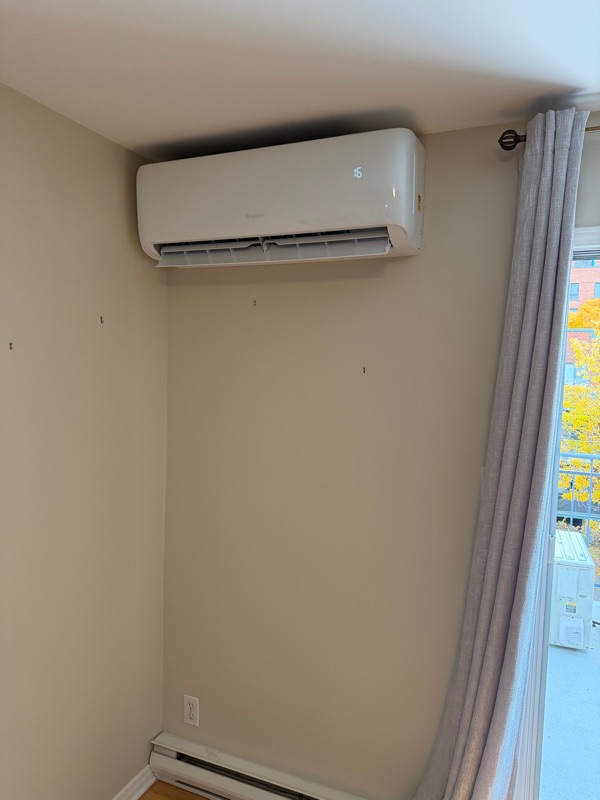
- Clean the indoor unit filters. Open the front panel, remove the filters, vacuum them or rinse them with warm water, and let them dry completely before replacing them. Natural Resources Canada recommends cleaning or changing the filter at least every three months; more often in homes with pets or open-plan kitchens.
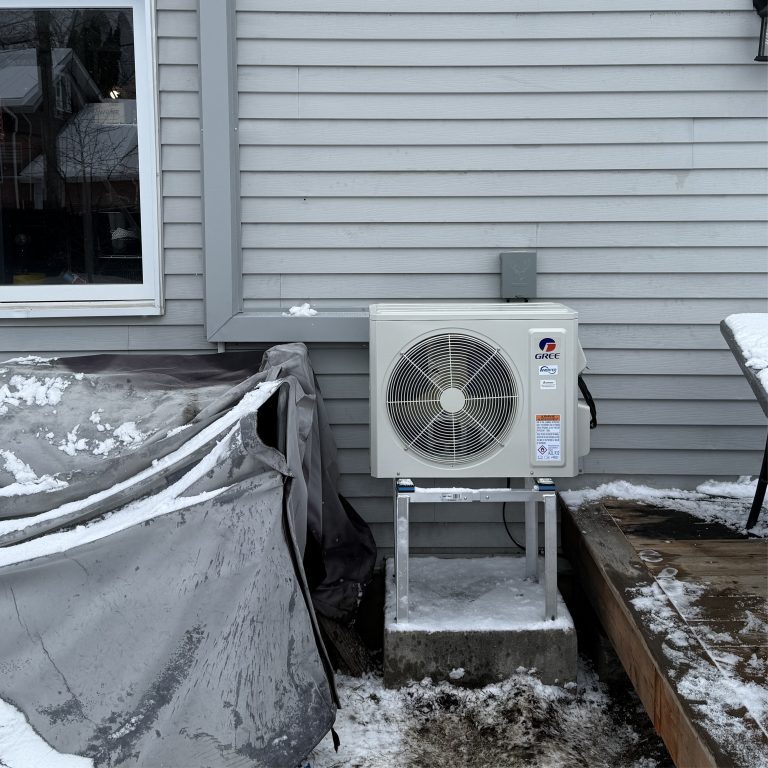
- Clear the outdoor unit. Remove leaves, branches, and debris around and above the unit. Leave space on each side for air circulation. Never cover the outdoor unit with a closed cover during winter: in heating mode, it needs to draw in outside air.
- Check the support and height. The unit must remain above accumulated snow. If it is placed directly on the ground or on a base that is too low, snow and ice can block the coil. A raised or wall-mounted support often solves the problem permanently.
- Check the defrost water drainage. During the winter, the unit melts the frost on its outdoor coil. This water must flow freely under the unit. If it freezes, it forms a block of ice that eventually reaches the coil or fan. Locate where the water is dripping and make sure it is not trapped.
- Inspect the drip tray and drain of the indoor unit. In heating mode, the wall unit produces less water than in cooling mode, but a drain that has been partially clogged since the summer can still overflow. A professional should clean the drip tray and check the drain’s slope.
- Have the coil and fan cleaned. Dust adhering to the inner coil and fan reduces the flow of hot air. This cleaning requires specialized products and partial disassembly: entrust it to a refrigeration technician.
- Have the pressures, sensors, and defrosting system checked. The technician will read the operating pressures and temperatures to detect a leak or refrigerant shortage, then check the defrost cycle and temperature sensors. A faulty sensor can prevent defrosting from starting at the right time.
- Test the heating mode and adjust your settings. Before the first significant cold weather, put the unit in heating mode and check that the air coming out is warm after a few minutes. Set a stable temperature rather than sharp drops at night: Natural Resources Canada recommends moderate reductions of no more than 2°C, because a heat pump reacts more slowly than a furnace.
What you can do and what falls to the refrigeration technician
| Verification | Owner | Refrigeration technician |
|---|---|---|
| Indoor unit filters | Yes, regularly | During the annual visit |
| Debris and snow around the outdoor unit | Yes, all winter | Clearance check |
| Outdoor unit support and height | Observation | Correction or new support |
| Defrost water drainage | Observation | Drainage correction |
| Internal coil, turbine, tank and drain | No | Yes |
| Refrigerant pressures, probes, defrosting | No | Yes |
| Electrical connections and disconnect switch | No | Yes |
Never disassemble the outdoor unit casing and do not use a sharp object to break the ice on the coil: the fins and tubes are fragile, and a perforation will cause a refrigerant leak.
Three things to remember during winter
After each storm, check the outdoor unit
Clear away any accumulated snow around and on top, either by hand or with a broom. Also check that no snow or ice falling from the roof is falling directly onto the unit.
Don’t worry about the “smoke”.
In cold and damp weather, it’s normal to see steam coming from the outdoor unit and to hear a hissing sound or a change in noise for a few minutes: this is the defrost cycle. We explain this in detail in our article “Why a heat pump ‘smokes’ in winter .”
Keep a portable heater in working order
Each model has a minimum operating temperature for heating, specified by the manufacturer: for example, -25°C or -30°C for the wall-mounted models we install. Below this threshold, or if the heat pump is undersized, your baseboard heaters or furnace will take over. Check that they are working before winter.
What if the device is already heating poorly?
If your heat pump is blowing lukewarm air, frequently shutting down, or displaying an error code, don’t just clean the filter. Consult our guide to heat pumps that have stopped heating: 9 causes to check , then request a diagnosis from our heat pump repair service.
Frequently Asked Questions
Should you cover your heat pump in winter?
No, not if you’re using it for heating. The outdoor unit needs to draw in outside air to operate. A closed cover blocks the airflow and promotes ice buildup. However, a small awning attached above the unit, at a safe distance, can protect it from snow falling from the roof.
How often should the filters be cleaned in winter?
Natural Resources Canada recommends cleaning or replacing the filter at least every three months. In winter, the unit runs a lot: check it monthly, especially if you have pets.
When should I have my professional maintenance done before winter?
Autumn is ideal, before the first sub-zero nights. The refrigeration technician cleans the coil, the fan and the drain, checks the refrigerant pressures, the electrical connections and the defrost cycle.
Is it normal for the outdoor unit to be covered in frost?
A light frost is normal in cold and damp weather; the appliance melts it during defrosting. However, a thick layer of ice that doesn’t disappear after a defrost cycle requires inspection.
Schedule your heat pump maintenance now before the cold weather arrives: request a quote or call us at 438.816.0992.